
Storm Damage Explained
Hail damage starts at impact—and can worsen long after the storm.
A roof may look normal from the ground while shingles, flashing and rooftop components have already been compromised. Here is how hail damage happens, how it progresses and when a professional inspection matters.
How hail damages an asphalt-shingle roof
Hail transfers energy into the roof surface. The result depends on hail hardness, wind speed and direction, roof pitch, shingle age, material condition and what lies beneath the impact point.
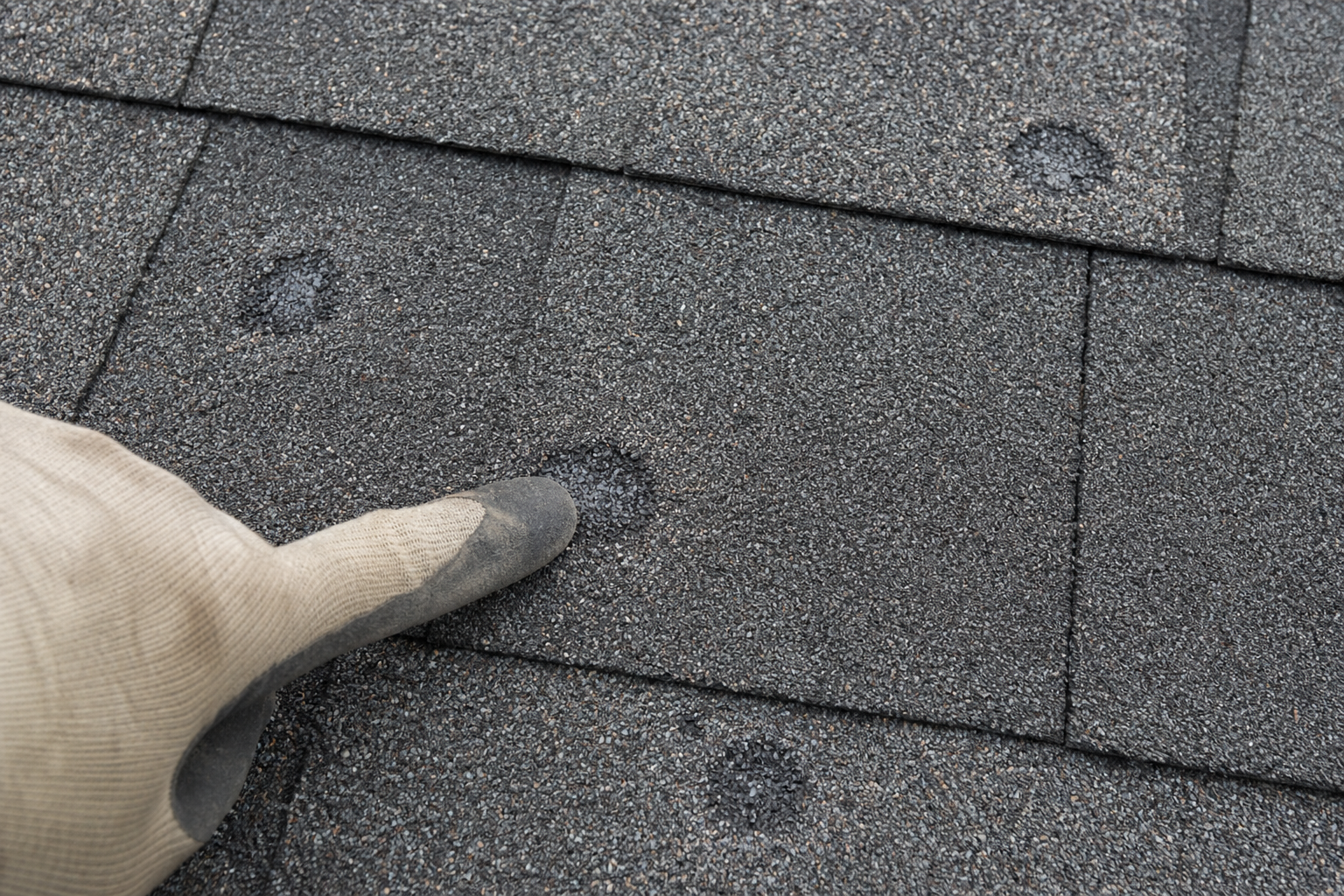
Granule displacement
Impact can loosen or remove the protective mineral granules that shield asphalt from sunlight and weather. Fresh loss may expose a darker impact area.
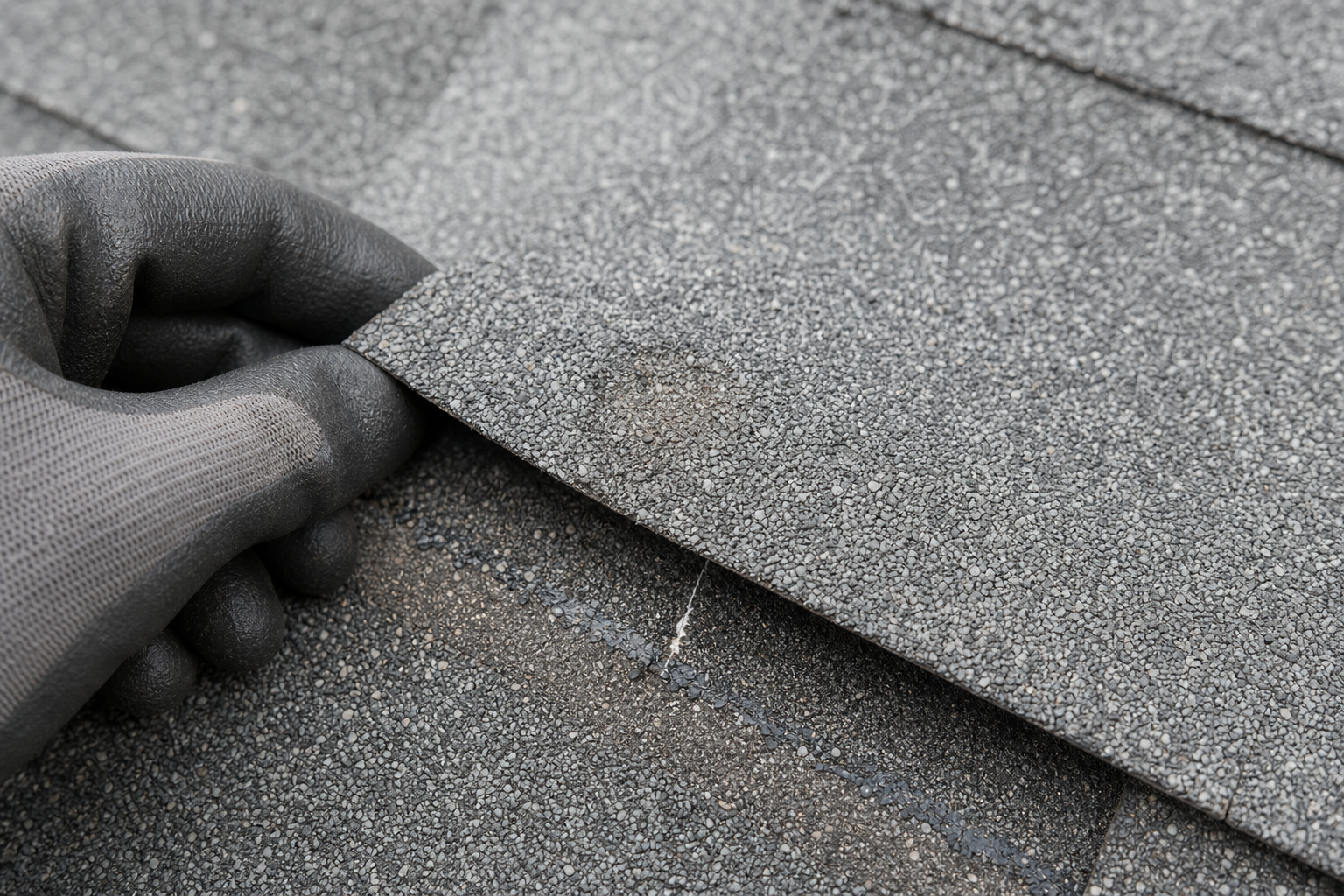
Asphalt and mat bruising
The shingle may compress, crack or fracture beneath the surface. A bruise can weaken the fiberglass reinforcement even when there is no visible hole.
Seal and edge disruption
Wind-driven hail and storm winds can disturb adhesive seals, tabs and edges. Once loosened, shingles are more vulnerable to future wind uplift and water entry.
Important: Not every hailstorm causes functional roof damage, and not every mark is hail damage. Blisters, foot traffic, manufacturing conditions and normal aging can look similar. A qualified inspection should distinguish storm effects from wear before an insurance decision is made.
Additional signs of hail damage
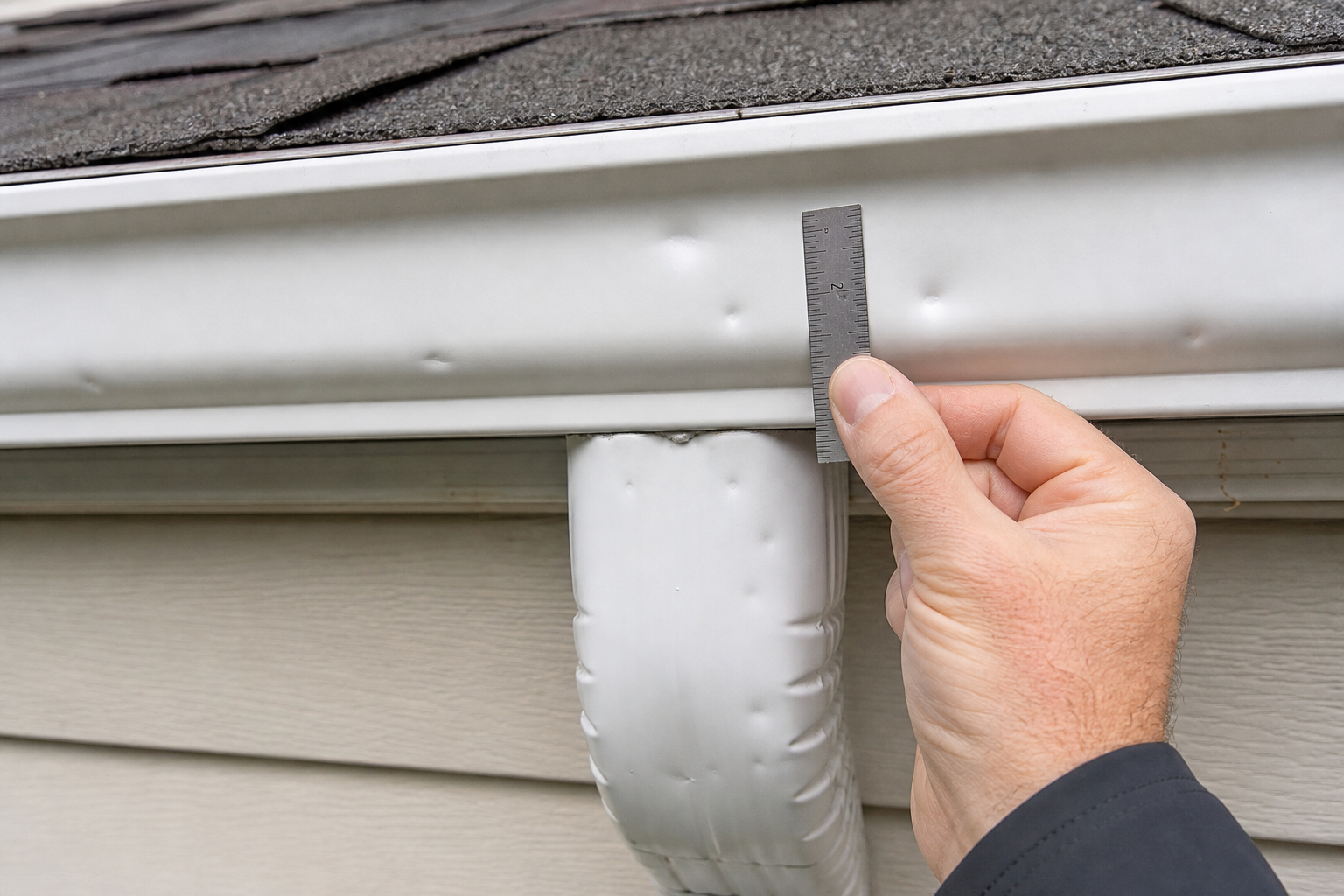
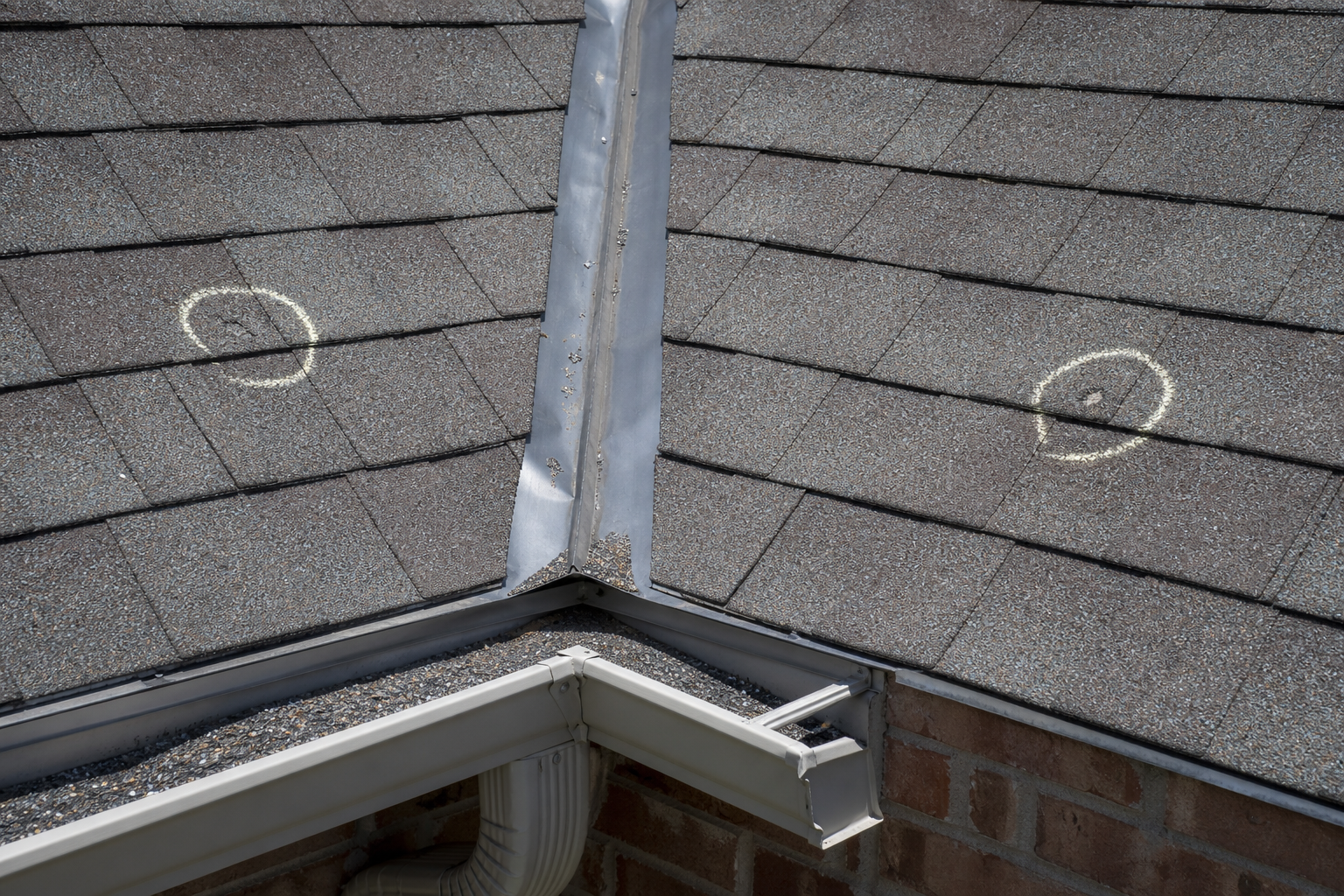
Hail evidence can appear on both roofing materials and softer exterior metals. Inspectors compare damage patterns across the property rather than relying on a single mark.
How damage can progress over time
The progression is not identical on every roof, but an untreated impact can create a chain of deterioration as sun, heat, wind and rain continue working on the damaged area.
Initial impact
Granules shift, asphalt compresses and the shingle mat may be bruised or fractured.
Weather exposure
Exposed asphalt receives more ultraviolet and thermal stress, accelerating surface aging.
Cracking or loosening
Repeated heating, cooling and wind can enlarge cracks or weaken seals around damaged shingles.
Water pathway
Moisture may reach fasteners, seams, flashing or underlayment when the exterior layer no longer sheds water correctly.
Interior consequences
Persistent intrusion can stain ceilings, wet insulation, deteriorate decking and encourage microbial growth.
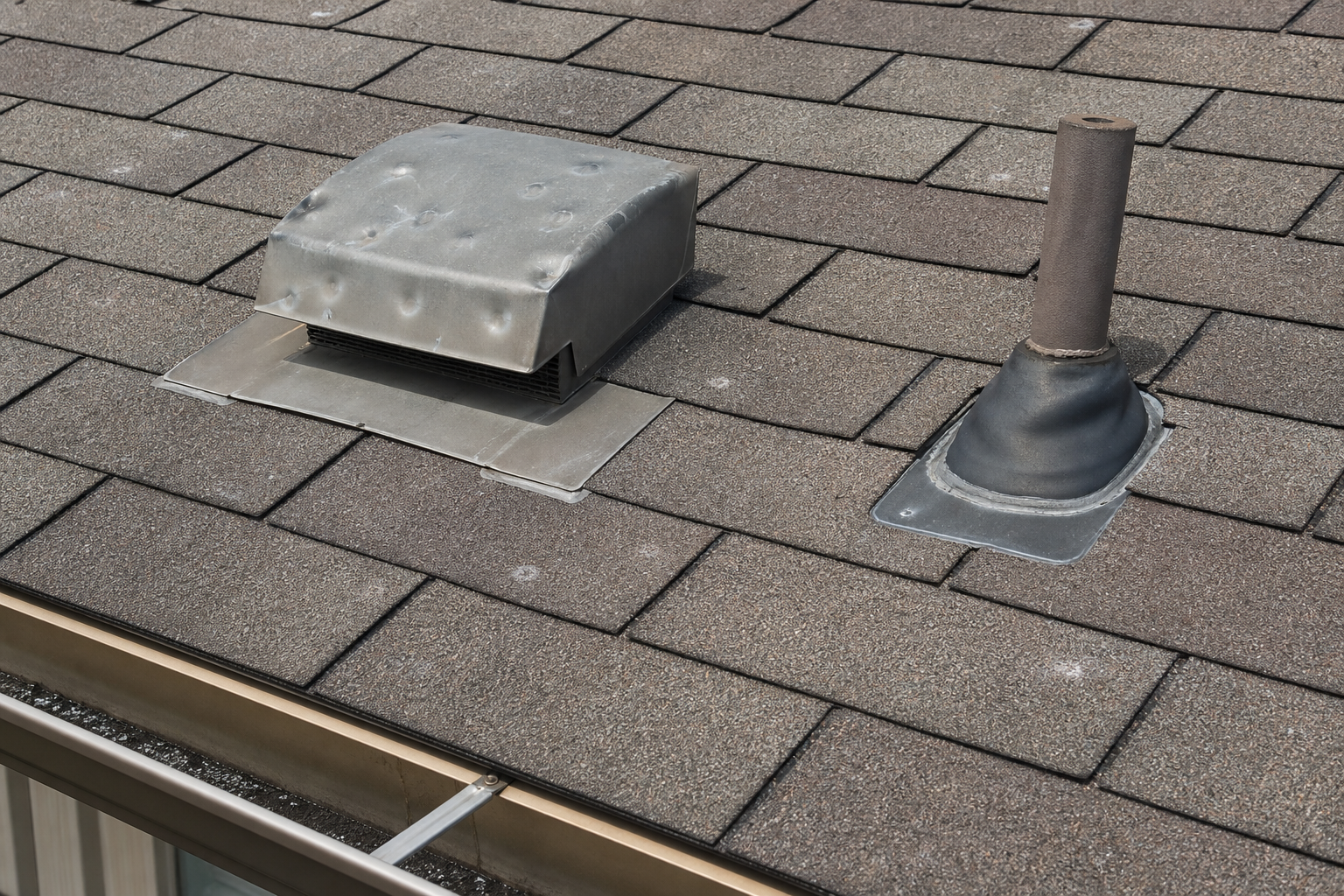
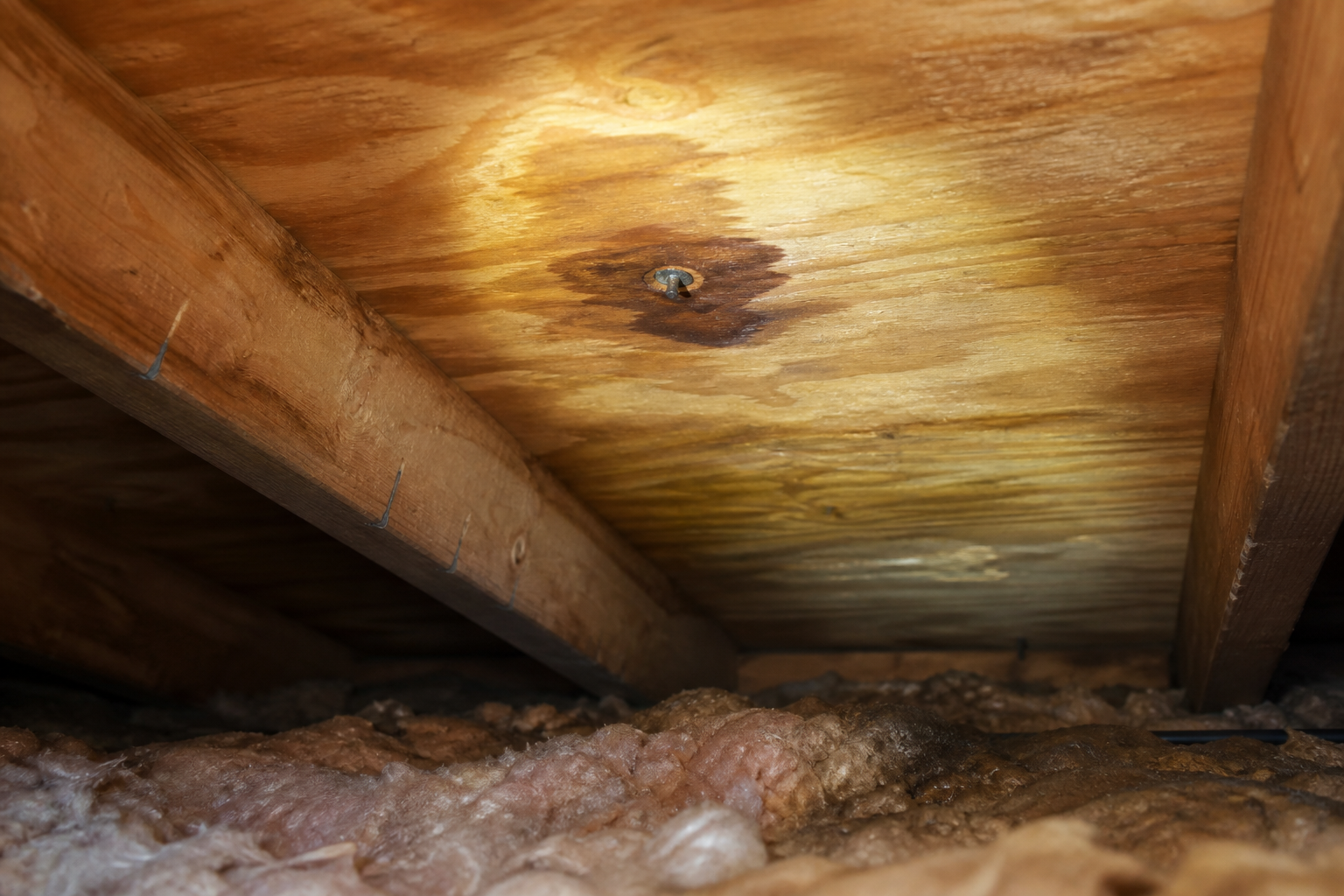
Roofing components affected by hail and wind
A storm inspection should cover the entire roofing system—not just the field shingles.
Shingles and ridge caps
Check for displaced granules, bruises, cracks, lifted tabs, missing pieces and exposed fasteners.
Flashing and valleys
Metal edges, valleys, wall transitions and chimney flashing may be dented, loosened or separated.
Vents and penetrations
Pipe boots, roof vents, exhaust caps and skylight components can crack, dent or lose their watertight seals.
Gutters and downspouts
Dents and granule accumulation can provide storm clues while blockages may interfere with drainage.
Underlayment and decking
These concealed layers are usually affected after water passes the exterior system. Soft or stained decking can indicate ongoing intrusion.
Interior and attic
Inspect for damp insulation, darkened wood, rusted fasteners, musty odors, ceiling stains and active drips.
Why homeowners should act promptly
Prompt action does not mean approving permanent construction before the insurer can inspect. It means documenting the loss, contacting the insurance company, protecting the property and moving the approved repair process forward without unnecessary delay.
Policies may include notice deadlines
Claim-reporting requirements vary by policy. Waiting can create questions about whether notice was timely or whether later weather caused part of the damage.
Evidence becomes harder to separate
Photos, storm dates and early inspection records help distinguish a specific hail event from normal aging or damage caused by a later storm.
Small openings can become larger losses
Compromised shingles, seals or flashing may allow repeated moisture entry, affecting underlayment, decking, insulation and interior finishes.
Reasonable mitigation may be required
Homeowners policies may require temporary steps to prevent further damage. Photograph conditions first, keep receipts and use safe temporary protection when needed.
The adjuster needs access to the original damage
Texas guidance advises homeowners not to make permanent repairs until the insurance company has had an opportunity to inspect and approve the next step.
Approved repairs restore protection
Once inspection and scope are complete, delaying necessary repairs leaves already-compromised components exposed to more heat, wind and rain.
Best sequence: document the date and conditions, notify your insurer promptly, make only necessary temporary repairs, save receipts, cooperate with the adjuster, then schedule permanent repairs after carrier approval. Coverage, deadlines and claim decisions are controlled by the policy and insurer.
Consumer guidance: Texas Department of Insurance — Hail damage claim tips
What to do after a Texas hailstorm
Safety and documentation come first. Avoid climbing onto a wet, steep or visibly damaged roof.
Insurance note: Coverage and pricing are determined by the policy and carrier. Texas Windstorm Solutions documents observed conditions and explains construction scope; insurance projects require consultation because adjuster pricing is commonly prepared in Xactimate.
Get clarity before the next storm.
Start with satellite measurement and a preliminary shingle estimate. We will verify roof conditions in person before final recommendations, scope or signatures.
Start My Roof Estimate